A loved one has dementia. . . .when is it time to move?
The strongest guidance from dementia-care organizations emphasizes the best time for someone with dementia to move—whether into a new home, assisted living, or memory care—is early in the disease process, before major cognitive or behavioral decline makes the transition traumatic. At this stage of dementia, the person can still learn new routines, participate in decisions, and adapt to a new environment more easily. Moves made too late often increase confusion, agitation, and decline.
What determines the “right time”
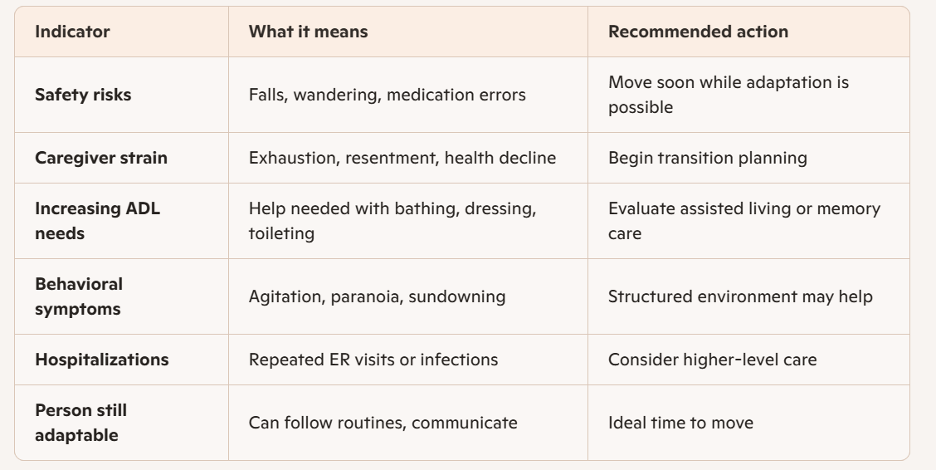
Safety concerns — wandering, falls, kitchen accidents, medication errors, or nighttime confusion are major indicators that home is no longer safe.
Caregiver burnout — when family caregivers are overwhelmed, sleep‑deprived, or unable to provide needed care.
Increasing care needs — difficulty with bathing, dressing, toileting, or eating often signals the need for more structured support.
Behavioral changes — agitation, paranoia, sundowning, or aggression can make home care unsafe.
Medical complexity — multiple chronic conditions, frequent hospitalizations, or mobility decline.
Social isolation — loneliness accelerates cognitive decline; structured environments can help
Why Earlier is Better
Research and clinical guidance from the National Institute on Aging and Alzheimer’s Association emphasize that transitions become harder as dementia progresses. Early moves help because:
The person can still learn the layout of a new home or facility.
They can participate in choosing where they live, preserving dignity.
They experience less disorientation and fewer behavioral symptoms.
Staff can get to know them while they can still communicate preferences.
It prevents a crisis-driven move after a fall, hospitalization, or caregiver collapse.
Signs it’s not too early
A move is appropriate even if the person shows the following conditions, which are actually the best conditions for a smooth move :
Still recognizes family
Can perform some daily tasks with prompting
Has mild confusion but is aware of surroundings
Is beginning to need supervision for safety
Here’s a quick decision table to help you evaluate readiness: